
Rug
How to Start Deep Work When You Feel Stuck
A practical 10-minute startup routine for beginning deep work when your task feels vague, heavy, or easy to avoid.
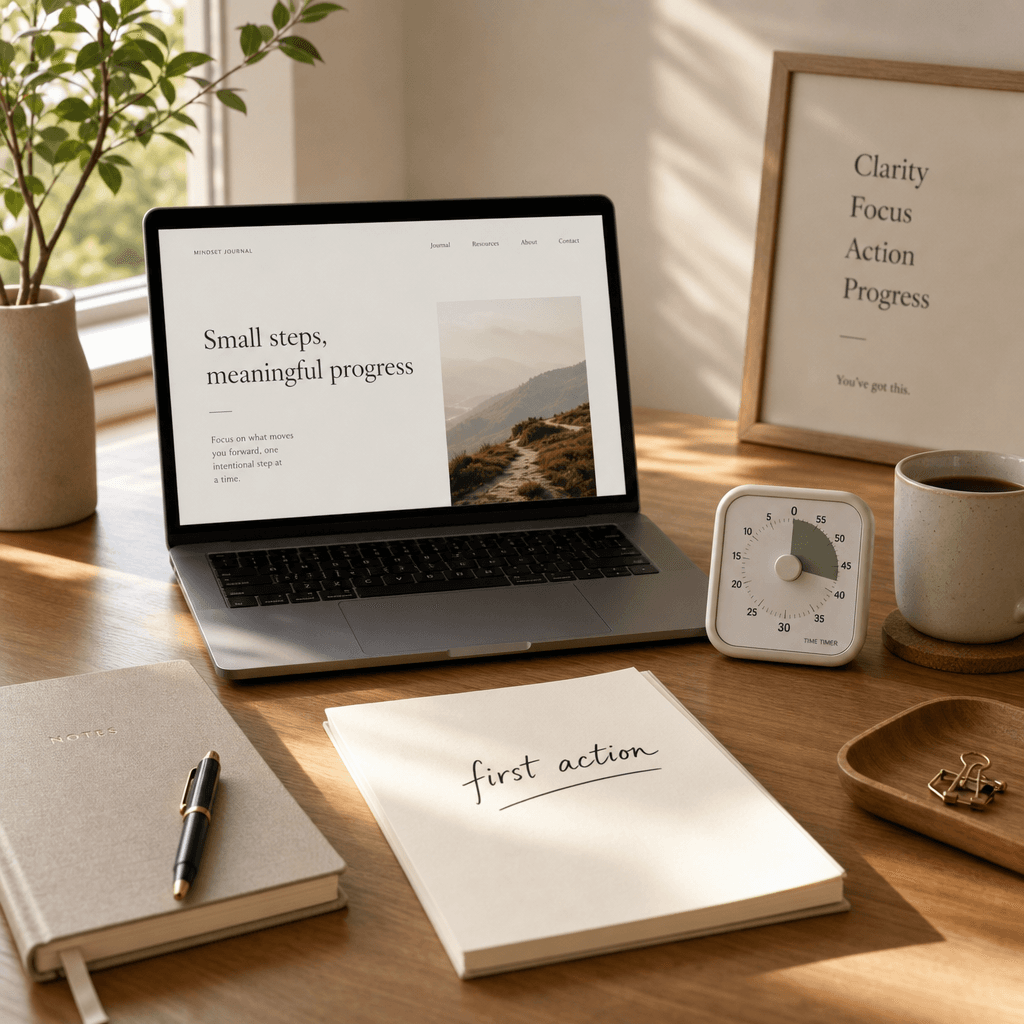
Quick Facts
- Search intent: Help readers overcome procrastination at the start of focused work.
- Best for: Knowledge workers, students, founders, and creators who know what matters but struggle to begin.
- Core method: Shrink the task, define the next visible action, and use a short focus sprint to create momentum.
- Time required: About 10 minutes to set up, then 25–50 minutes of focused work.
- Deepomo fit: Use Deepomo to turn the startup routine into a repeatable focus session instead of relying on willpower.
- Not ideal when: You are genuinely exhausted, missing key information, or facing a task that needs a decision from someone else first.
Why Starting Deep Work Feels Hard
Deep work often does not fail because people are lazy. It fails because the starting line is unclear.
A task like “work on proposal,” “study chapter 4,” or “fix onboarding flow” looks simple on a to-do list, but it may hide several decisions:
- What exactly should I work on first?
- How good does the first version need to be?
- What materials do I need open?
- How long should I spend before checking messages?
- What does “done for now” look like?
When those questions are unanswered, your brain looks for easier wins: inbox, chat, small admin tasks, or another round of planning.
A better approach is to stop trying to feel ready. Instead, create a small, repeatable startup routine that makes the first move obvious.
The goal is not to feel motivated before deep work. The goal is to make the first 10 minutes too clear to avoid.
The 10-Minute Deep Work Startup Routine
Use this routine when you are stuck, scattered, or tempted to postpone important work.
Minute 1–2: Name the real task
Replace a vague task with a specific work target.
Instead of:
- “Work on report”
- “Study chemistry”
- “Improve website”
Write:
- “Draft the first three bullet points for the report summary”
- “Solve five practice problems from section 4.2”
- “Rewrite the pricing page headline and first section”
A useful target should be visible. If someone looked at your screen after the session, they could tell whether progress happened.
Minute 3–4: Choose the smallest useful output
Ask: “What would count as a useful first version?”
Examples:
- A messy outline
- A list of objections
- Three solved examples
- One edited paragraph
- A rough diagram
- A bug reproduced once
This lowers the emotional weight of the task. You are not committing to finishing everything. You are committing to producing the next useful piece.
Minute 5–6: Remove one obvious friction point
Do not clean your entire workspace. Remove only the friction most likely to interrupt this session.
Common examples:
- Close extra tabs
- Put your phone across the room
- Open only the document, notes, and reference you need
- Turn off chat notifications
- Fill your water bottle before the timer starts
If you use Deepomo, this is a good moment to start a focus session and set the intended task. That small act creates a boundary: this block has a purpose.
Minute 7–8: Write your “first action” sentence
Use this format:
“When the timer starts, I will ____.”
Examples:
- “When the timer starts, I will write the first rough paragraph, even if it is bad.”
- “When the timer starts, I will solve problem 1 without checking the answer key.”
- “When the timer starts, I will read the customer notes and highlight repeated complaints.”
- “When the timer starts, I will open the bug report and reproduce the issue once.”
This sentence matters because starting is a transition. You are giving yourself a precise first movement, not a general aspiration.
Minute 9–10: Start with a short sprint
Set a timer for 25 minutes if you feel resistant. Use 45–50 minutes only if the task is already clear and you have enough energy.
During the sprint, your only job is to stay with the task until the timer ends. You can make messy progress. You can write badly. You can get stuck and write down the blocker. But you do not switch tasks.
If the task still feels impossible after 10 minutes of setup, that is useful information. It may mean the task is not actually a work task yet. It may be a planning problem, a decision problem, or a dependency problem.
Three Examples You Can Copy
Example 1: Writing when the page is blank
Vague task: “Write blog post.”
Startup version:
- Target: Draft the opening section and outline the main headings.
- Small output: A messy intro plus 5 headings.
- Friction removed: Close analytics, email, and unrelated research tabs.
- First action: “When the timer starts, I will write five bad opening lines.”
- Sprint: 25 minutes.
Why it works: The goal is not a polished article. It is to create raw material.
Example 2: Studying when the chapter feels too big
Vague task: “Study for exam.”
Startup version:
- Target: Practice one concept from chapter 4.
- Small output: Five completed problems and a list of mistakes.
- Friction removed: Put phone away and open only the textbook, notebook, and calculator.
- First action: “When the timer starts, I will copy the first problem and try it without notes.”
- Sprint: 25 minutes.
Why it works: Studying becomes active. You are testing understanding instead of rereading passively.
Example 3: Product work when the problem is messy
Vague task: “Improve onboarding.”
Startup version:
- Target: Identify the first confusing step in the onboarding flow.
- Small output: A short list of three friction points.
- Friction removed: Open product, notes, and recent feedback only.
- First action: “When the timer starts, I will go through onboarding as a new user and write down every hesitation.”
- Sprint: 45 minutes.
Why it works: The session produces evidence before jumping into solutions.
When This Method Is Not Enough
This routine is useful for starting work, but it is not a cure for every kind of resistance.
It is not ideal when:
- You are too tired to think clearly.
- The task depends on feedback, approval, or missing information.
- You are avoiding the task because the priority is unclear.
- The work is emotionally loaded and needs a conversation, not just a timer.
- You have too many competing commitments and no realistic capacity.
In those cases, forcing a focus sprint may create more frustration. A better move is to clarify the blocker:
- If you are tired: choose recovery or a lighter admin block.
- If information is missing: write the question you need answered.
- If the task is too large: define the next decision, not the next deliverable.
- If priorities conflict: pause and choose what will not get done today.
Deep work works best when the next action is real. If the next action is fake, vague, or dependent on someone else, the timer will not solve it.
A Simple Deepomo Workflow for Getting Started
You can use Deepomo to make this routine easier to repeat.
Try this setup:
- Create a focus session for the task you are avoiding.
- Write the session goal as a small output, not a broad project name.
- Set a short timer if resistance is high.
- Start with your first-action sentence visible in your notes.
- At the end, record what changed: draft created, problem solved, blocker found, or next step clarified.
A good session note might look like this:
“Drafted rough intro and 4 headings. Still need examples. Next session: add one example under each heading.”
That final note is small but powerful. It reduces startup friction next time because you are leaving yourself a clear re-entry point.
Soft CTA: If you already use Deepomo, save this as a reusable startup ritual before important focus sessions. If you are new to Deepomo, try it with one task you have been postponing and keep the first sprint intentionally small.
FAQ
How long should my first deep work session be when I feel stuck?
Start with 25 minutes. A shorter session lowers resistance and helps you build momentum. Once the task is moving, you can extend future sessions to 45 or 50 minutes.
What if I still procrastinate after setting the timer?
Make the task smaller. If “draft the section” still feels too heavy, change it to “write five rough bullet points.” Procrastination often means the next action is still too vague or too large.
Should I plan the whole project before starting?
Not always. If the project is complex, a rough plan helps. But when you are stuck at the starting line, planning can become avoidance. Define only enough to begin the next useful action.
Can this work for creative tasks?
Yes. Creative work often benefits from lowering the standard for the first pass. Aim for sketches, fragments, rough options, or bad drafts. Quality usually improves after there is something to shape.
What should I do after the first sprint?
Write a short re-entry note: what you completed, what is unresolved, and the next action. This makes the next session easier to start and prevents you from losing context.
Deel